
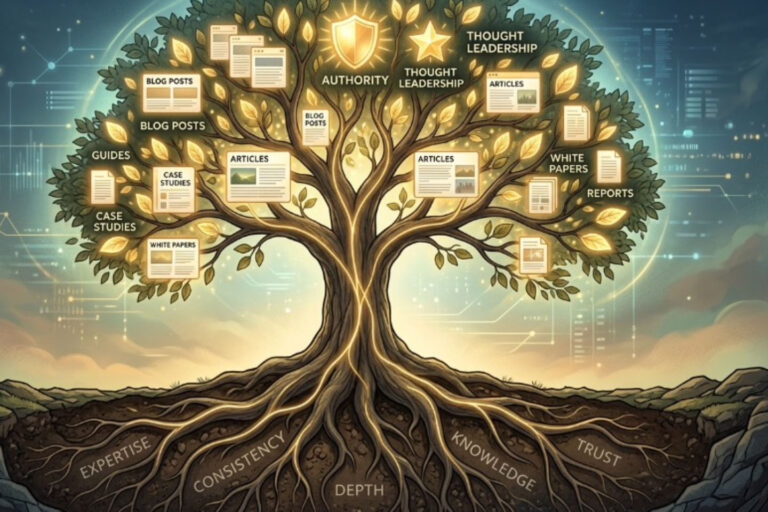
Search Engines Still Depend on Human-Created Content to Deliver Trusted Answers
Let’s be honest. Once search engines began generating answers to the questions, many website owners freaked out. Traffic dropped. Rankings shifted. The whole game was now a no-ride. Suddenly, the game was a no-ride. However, the thing people are overlooking is that AI search engines need human written content in order to function. They never could.
Why AI Search Engine Optimization Relies on Original Blogs and Human Voices is more than just interesting, it’s the best business tactic you can implement right now! Please read carefully if you desire to expand your website, safeguard rank opportunities, and get cited in AI search results pages.
Who This Topic Is For
As a website owner, business blogger or web marketing professional providing AI SEO services to clients, this is the kind of exchange you need to be in. From a brand that has decided to build the organic traffic all the way by itself, to a marketing manager at a rocketing company, whether you’re looking at it as a single entrepreneur, or as a business that wants to hire an AI SEO expert for the brand it all impacts you directly.
This is crucial for any business considering enterprise AI SEO services, agencies that provide AI search marketing services or LLM SEO Services, and content creators seeking to remain relevant in an AI-driven environment where search is significantly different than it was two years ago. It is not necessary to be a tech genius to be able to benefit from this. You need to be familiar with its location and just do it sooner than your competition!
The Real Problem and the Real Opportunity
This is what really takes place. Google’s AI Overviews, Perplexity, and ChatGPT Search, among other tools, are obtaining their answers somewhere. Well written, authoritative, human-generated content in the open web is that somewhere? These systems reply when prompted with a question to a user, citing sources. Those sources are known. The sources receive trust. Traffic goes to those sources.
Now, the big question is: Will your website be one of them?
At the moment, the majority of business people have neglected to consider the significance of AI search optimization, which involves organizing and creating an AI-friendly, trustworthy, and cited content. This is not a technical or “outside the line of duty” subject. It is the new era of SEO for AI search engines, and it is even shaping who’s ranking higher and who is not even seen on the search results page.
It’s an opportunity like no other size. The majority of your rivals haven’t gotten the idea yet. The companies that invest in quality content, a smart structure, and AI content optimization right now will be the ones to be dominant in search for the next 3 to 5 years.
Why This Matters More Than Ever
Search behavior has changed. People no longer just click on ten blue links. They ask questions, get direct answers, and only visit a source if they need more depth. That means if your content is not the source being cited, you are invisible.
Here is the part that should give you a sense of urgency: AI systems are not creating original knowledge. They are summarizing, synthesizing, and referencing what already exists on the web. According to research from Ahrefs, a significant share of AI-cited sources do not even rank in the traditional top ten which means there is a genuine opening for well-optimized content to get cited in AI search results even when it does not hold a dominant Google position. That is both exciting and sobering.
It is exciting because it means any business, any blog, any brand that publishes authoritative and clearly structured content now has a real shot at AI visibility. It is sobering because the window to act is not unlimited. As more businesses wake up to the value of AI search visibility solutions and invest in proper optimization, the space will get competitive fast.
The true emotion of many business owners at this moment is fear that they will be unimportant, fear that they will lose the traffic that they’ve worked hard for over the years, fear that their name won’t be mentioned by a machine-generated copy that probably isn’t their original work. That fear is valid. But the answer is not to step back. The answer is to step forward with better content and a smarter strategy. This is exactly where AI SEO services and proper optimization work come in.
A Practical Step-by-Step Plan to Improve AI Search Rankings
Step 1: Start With a Proper AI Visibility Audit
If you are going to make any changes, it’s important to know where you stand first. An AI visibility audit will examine the structure of your content, if it has clear answers to the questions, if your domain is perceived as authoritative to machine-reading systems, and if your pages appear in any AI-provided answers.
This is because many organizations who contact us for an AI SEO audit service are surprised that they are showing up in AI answers to topics they had no idea they had been ranking for and they are missing the opportunity to maximize for those topics.
Step 2: Write Content That Answers Real Questions
AI systems are built to serve user intent. They look for content that answers questions directly, factually, and with enough depth to be trustworthy. This means your blogs need to lead with clear answers, use structured headings, and cover a topic well enough that a machine can summarize it confidently. The goal is to optimize website for AI search in a way that feels natural to human readers too.
This is the heart of human content optimization service thinking: not writing for a keyword, but writing for a question. Think about what your audience is actually asking, then answer it better than anyone else online.
Step 3: Build Topical Authority
One blog post is not enough. Google’s systems and AI engines alike reward websites that demonstrate consistent expertise across a topic. If you run a marketing agency, publishing twenty well-researched posts about AI search optimization, AI citation optimization, and AI content marketing services builds a trust signal that a single article cannot.
Think of it like this: you are not just publishing content, you are building a body of evidence that your site knows what it is talking about. That consistency is what gets you cited again and again.
Step 4: Structure Your Content for Featured Snippets and AI Panels
Google AI Overview optimization is not a mystery. It follows the same logic as featured snippet optimization: give a clear, direct answer early in your content, use short paragraphs, include relevant subheadings, and make your key points easy to extract. Tables are especially effective. When your content can be pulled cleanly and presented directly in an AI response, you become the reference and references build authority over time.
Here is a simple framework for every blog post:
Element | What to Do |
Opening paragraph | Answer the main question in 2-3 sentences |
Subheadings | Use question-format H2s where possible |
Body paragraphs | Keep them short (3-5 lines max) |
Lists and tables | Use them to make key info easy to extract |
Conclusion | Summarize key takeaways clearly |
Step 5: Work With the Right Support
This is where working with a best AI SEO agency or an experienced AI SEO consultant can genuinely accelerate your results. Optimizing for AI search is not the same as traditional SEO. Agencies that offer AI visibility services understand how these systems evaluate authority differently from classic ranking algorithms.
If you want to hire AI SEO expert help or are exploring AI SEO pricing for your business, know that the range varies widely depending on your current content volume, your industry competitiveness, and whether you need ongoing AI content optimization service or a one-time strategic audit. An AI search visibility agency that specializes in this space will be able to map out what a realistic AI search optimization package looks like for your specific situation.
For larger organizations, enterprise AI SEO often requires a more structured approach mapping content across multiple departments, creating consistent voice and authority signals, and running ongoing performance measurement. An AI search visibility solutions provider with enterprise experience will know how to manage that scope without losing the human quality that makes content worth citing.
Step 6: Do Not Stop Publishing
This might sound obvious, but it is the step most businesses skip when they get nervous about AI replacing content. The answer to AI-driven search change is not to publish less. It is to publish smarter. Use AI search consulting to identify gaps in your content coverage. Use your AI search optimization company relationship and any AI search ranking services you invest in to keep your existing content refreshed and accurate. And keep showing up with original human perspective, real experience, and genuine expertise.
That is the thing no AI system can manufacture: your lived experience, your client stories, your industry observations. That is the raw material of content that gets cited. That is what makes AI search marketing services valuable when they are built around real human expertise, not generic output.
The Human Voice Is Your Competitive Edge
Here is the truth that no algorithm can change: AI search engines are built on human knowledge. They need original content to function. They need trustworthy sources to cite. They need human expertise to make their answers credible. That is not a weakness in the system, it is the whole point.
Your blog, your expertise, your human voice these are not becoming obsolete. They are becoming the most valuable assets in your entire digital strategy. The businesses that recognize this now, invest in proper AI content optimization, and show up consistently with genuine authority are the ones that will get cited, get trusted, and get traffic for years to come.
If you have been sitting on the sidelines wondering whether content still matters in an AI-driven world, the answer is yes more than ever. Start today. Optimize your existing content. Publish with purpose. And make sure the AI systems of tomorrow are referencing you, not overlooking you.
Reference
Ahrefs — AI Overview Citation Research (2024-2025): ahrefs.com/blog/ai-overviews